Why Work With an Experienced Period Underwear Manufacturer?
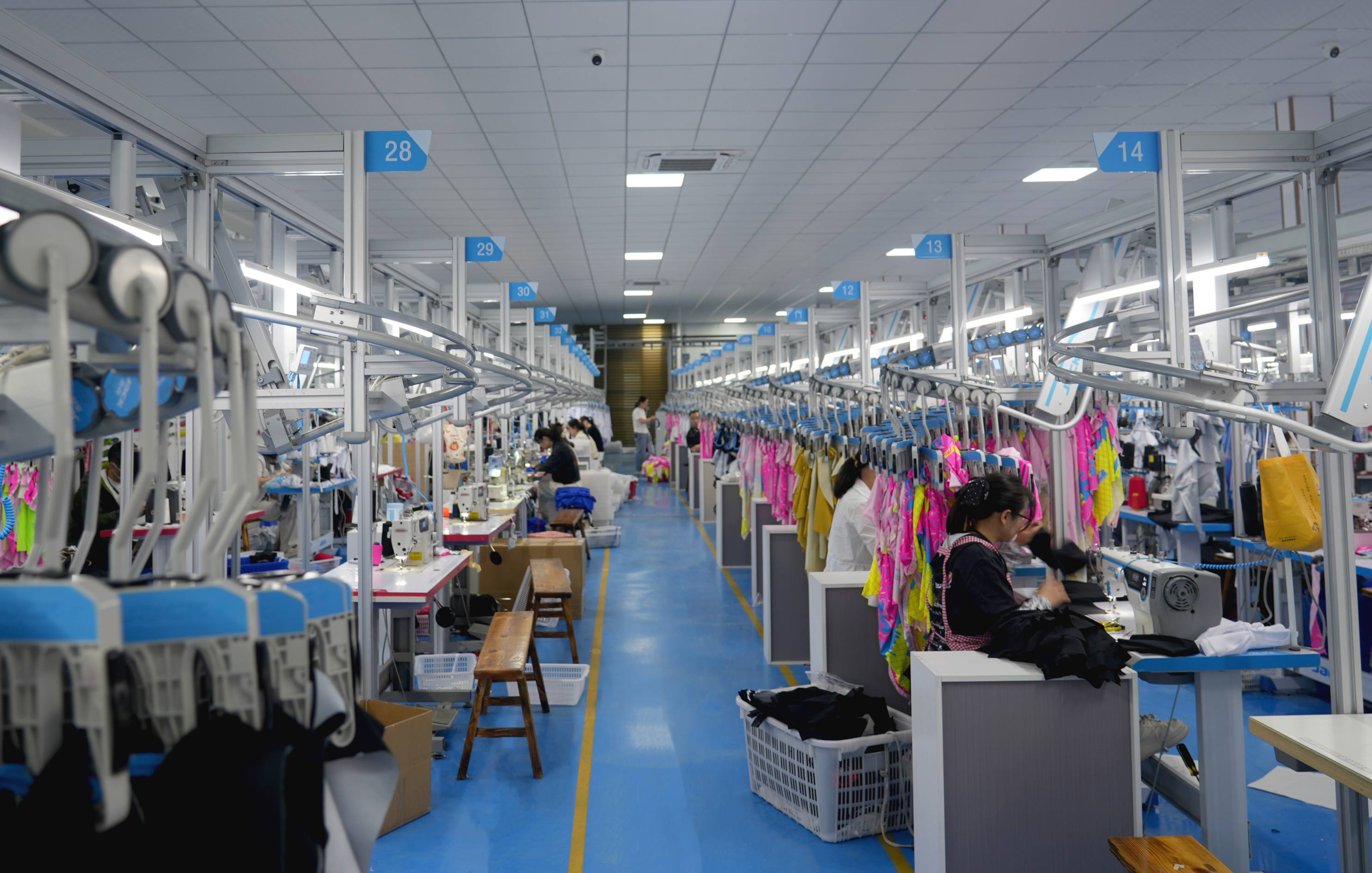
Working with an experienced period underwear manufacturer reduces the number of technical unknowns between a design sample and bulk production. A finished pair may combine 3–5 functional layers, multiple fabric weights, waterproof materials, elastics, and size-specific gusset dimensions. In a 10,000-unit order, even a 2% defect rate creates 200 pieces that may need rework or replacement. Manufacturers with established material testing, wash testing, measurement control, and in-line inspection can identify problems before packing. They also understand how absorbency, waterproof coverage, seam placement, fabric shrinkage, and elastic recovery affect the finished garment after repeated washing and normal daily wear.
Period underwear production starts with material compatibility rather than sewing capacity. A common construction uses a moisture-transfer top layer, one or more absorbent layers, a waterproof or water-resistant membrane, and an outer stretch fabric. Depending on the design, the gusset may contain 3, 4, or 5 layers, while the surrounding garment uses a lighter construction to maintain comfort.
The difficulty comes from combining materials with different stretch rates, thicknesses, shrinkage levels, and surface properties. If an outer fabric shrinks 4% after laundering while an internal laminated layer shrinks 1%, puckering or distortion can appear around the gusset. Experienced manufacturers normally evaluate materials as a combined structure instead of approving each fabric separately.
A waterproof membrane can pass its own material test and still perform poorly in a finished garment if stitching, lamination, gusset width, or seam placement is unsuitable.
Material weight also affects how the product feels. An absorbent textile with a higher GSM may hold more liquid, but increasing weight without changing layer design can make the gusset thicker and slower to dry. A manufacturer familiar with menstrual underwear can adjust fabric type, layer count, and coverage area rather than increasing thickness across the entire garment.
Absorbency claims require careful control because capacity alone does not describe performance. A garment must move liquid away from the skin, distribute it through the absorbent area, retain it under pressure, and prevent penetration through the lower barrier. A sample that holds 30 mL when tested flat may behave differently when worn during walking, sitting, or sleeping.
Production teams therefore need measurable internal specifications. One style might be designed around a 20 mL target, while another may use 35 mL or more, but the test method must remain consistent between development samples and production checks. Changing the test liquid, pouring speed, conditioning time, or pressure can produce different results even when the garment has not changed.
A manufacturer with established procedures is more useful than one relying on informal descriptions such as “light,” “medium,” or “heavy.” If three production lots are being compared, the same method should be used for all three so the brand can identify whether a material or process change affected performance.
Fit adds another manufacturing variable because leakage protection depends partly on how the garment sits against the body. Leg openings that are too loose can leave gaps near the gusset edge, while excessive tension may cause discomfort and distort the absorbent area. Size grading therefore needs more than proportional enlargement.
For example, increasing every measurement by 10% from one size to the next would rarely produce a useful grading system. Waist, hip, rise, gusset width, gusset length, and elastic tension usually need separate grading rules. A manufacturer producing XS through 3XL may need different absorbent coverage dimensions across the range instead of using one gusset specification for every size.
| Production area | What should be controlled | Typical risk if ignored |
|---|---|---|
| Gusset width | Size-specific dimensions and tolerance | Edge leakage |
| Elastic tension | Stretch and recovery | Gaping or excessive pressure |
| Absorbent placement | Alignment with body-contact area | Uneven fluid distribution |
| Waterproof layer | Coverage beyond absorbent zone | Side or rear penetration |
| Seam position | Distance from protected area | Needle-created leakage path |
Construction methods also matter because waterproof textiles behave differently from ordinary underwear fabrics. A sewing needle creates holes by definition, so seam position must be planned around protected areas. More stitching is not automatically better, especially when it crosses a membrane intended to block liquid.
Factories with period underwear experience usually control needle size, stitch density, seam allowance, layer alignment, and fabric feeding more closely around the gusset. Even a 2–3 mm shift during assembly can matter when a protective layer is narrow or when the seam sits close to the edge of the absorbent zone.
The finished garment should be evaluated as one structure. Fabric data alone cannot confirm that a sewn product will resist leakage during use.
Wash durability needs similar attention because reusable underwear is sold for repeated use rather than single wear. Different materials can change after 5, 10, or 20 wash cycles through shrinkage, delamination, reduced elastic recovery, surface pilling, or changes in absorbent behavior.
Testing several wash cycles during product development helps reveal problems that may not appear in a new sample. A waistband that fits correctly before laundering can become tighter if the body fabric shrinks while the elastic remains stable. A laminated barrier can also develop edge separation if bonding conditions or material compatibility are poor.
Fabric color creates another variable. Dark, saturated shades can behave differently from pale colors because dyeing and finishing conditions may change the hand feel, stretch, or dimensional stability of the same base fabric. A responsible manufacturer should not assume that approving a black sample automatically approves every later color.
Bulk production introduces a different problem: consistency. A development sample may be made by one skilled sample technician, while a production order can involve several operators, machines, fabric rolls, and cutting batches. In a 20,000-piece order, a 1% workmanship defect rate still represents 200 garments.
Experienced factories use in-line checks rather than waiting until final inspection. Measurement, seam quality, gusset placement, elastic attachment, labeling, and workmanship can be checked while production is still running. Correcting a sewing setup after the first 300 pieces is far less disruptive than discovering the same issue after 20,000 pieces have been completed.
Material lot control also deserves attention. Two fabric rolls with the same composition can vary slightly in shade, stretch, width, or weight. For a stretch garment, a small difference in recovery can affect fit across several thousand pieces, particularly when elastic tension and pattern dimensions were developed around a different lot.
A manufacturer should therefore record approved material specifications and compare incoming goods against them. Depending on the fabric, useful checks may include GSM, width, stretch, recovery, shade, shrinkage, colorfastness, and visual defects.
Private-label development becomes easier when the supplier can connect brand requirements with manufacturing limits. A custom waistband, proprietary print, revised gusset length, special packaging format, or new absorbency level can affect MOQ, sampling time, material ordering, and production efficiency.
For example, introducing four colors across eight sizes creates 32 SKU combinations for a single silhouette. Adding two absorbency versions raises the range to 64 combinations. At that point, order planning is no longer just about the total quantity; allocation by size, color, and performance level affects material purchasing and production scheduling.
Brands working with an established supplier such as Ljvogues can discuss construction, private labeling, fabric choices, absorbency positioning, sizing, and packaging within one development process rather than treating each element as a separate purchasing task.
Documentation is another area where manufacturing experience matters. Textile products sold in markets such as the United States, United Kingdom, or European Union may need accurate fiber information, care instructions, origin information where applicable, and records supporting material or performance claims.
In the United States, textile labeling requirements have been governed for decades under federal rules administered by the Federal Trade Commission. In the EU, Regulation (EU) No 1007/2011 sets requirements related to textile fiber names and fiber-composition labeling. Requirements vary by market, so brands still need to confirm which rules apply to their own product and sales channel.
Manufacturers can support the process by maintaining fabric specifications, supplier records, production information, and third-party test reports where requested. A factory should not promise regulatory approval on behalf of a brand, but organized documentation makes independent compliance review more practical.
Chemical and colorfastness testing may also be requested depending on the buyer, retailer, material, and destination market. Testing standards from organizations such as ISO and AATCC are commonly used by textile laboratories for properties including colorfastness, dimensional change, and fabric performance.
The same discipline applies when comparing prices. A quotation that is $0.40 lower per piece may appear attractive, but on a 10,000-unit order the saving is $4,000. If poor fit, leakage, labeling errors, or workmanship result in a 5% rejected quantity, 500 units may require replacement before considering freight, handling, customer service, or lost selling time.
Experienced manufacturers can often reduce cost by changing pattern efficiency, fabric utilization, trim selection, construction sequence, or packaging rather than simply replacing functional materials with cheaper alternatives. Cutting one unnecessary operation from a large order can reduce labor without changing the customer-facing performance of the garment.
Production history also improves problem diagnosis. Leakage near the leg opening can come from insufficient barrier width, incorrect gusset alignment, loose leg tension, absorbent material that distributes liquid too slowly, or seam placement. Adding another layer without identifying the source may increase thickness without solving the problem.
A supplier that has produced several construction types can compare the failure with previous production data and isolate fewer variables at a time. If three sample versions change three different materials simultaneously, it becomes difficult to know which change produced the improvement. Controlled revisions make development more reliable.
Communication becomes particularly important before bulk production. The approved sample, measurement chart, bill of materials, color references, label artwork, packaging instructions, and construction details should all reflect the same revision. A change approved in an email but missing from the production file can produce thousands of incorrect units.
A useful pre-production process therefore freezes the approved specification before cutting begins. Many apparel buyers also use measurement tolerances rather than expecting every garment to match the specification to the millimeter. A tolerance such as ±0.5 cm or ±1.0 cm may be applied to selected measurements depending on fabric, construction, and measurement location.
The factory should also know which measurements have greater functional importance. A small difference in overall body length may have limited effect, while the same difference in gusset width or elastic opening can alter protection or fit.
Scaling adds one final manufacturing test. Producing 500 units from a small number of fabric rolls is different from producing 30,000 units across multiple lots, sizes, colors, and sewing lines. Purchasing, cutting, operator training, lot separation, inspection frequency, packing accuracy, and carton control all become more demanding as the order grows.
An experienced manufacturer builds the process around repeatability from the beginning. When a brand later adds four new colors, two additional sizes, or another absorbency level, the supplier already has approved patterns, construction records, testing references, and production history available for the next development cycle.